GST Recovery via Bank Allowed Without Notice if Dues Finalised | Biz Flow Kit
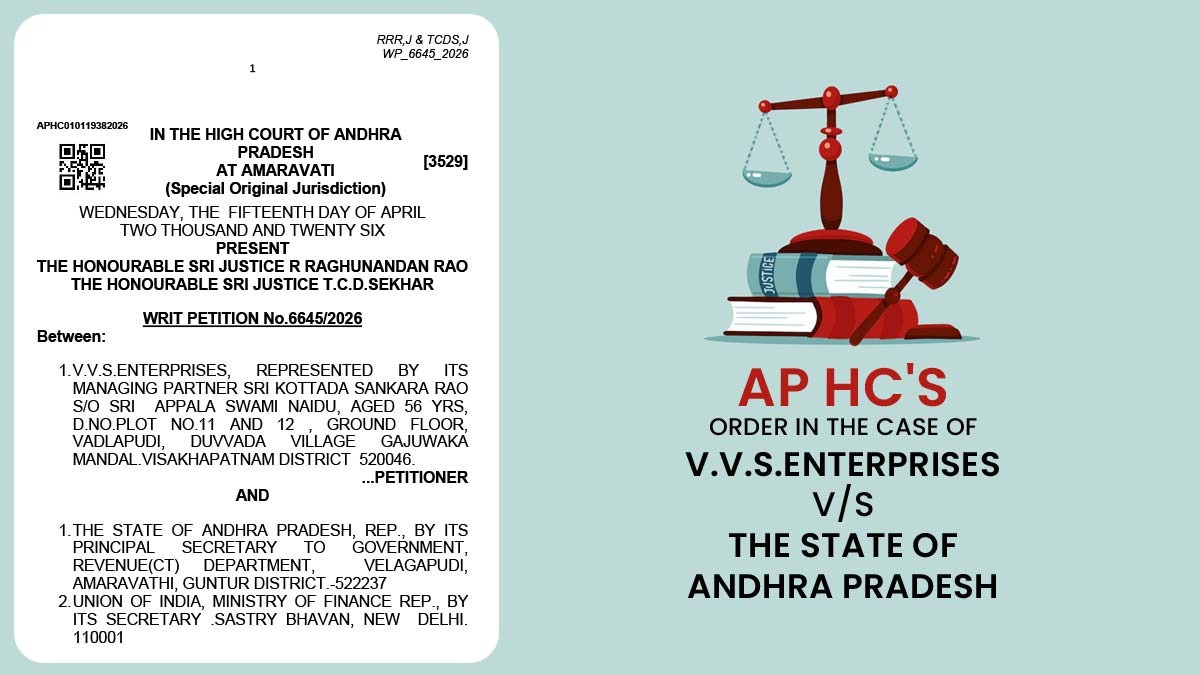
The Andhra Pradesh High Court has confirmed that when a government department takes action u/s79 to collect unpaid taxes, they do not have to give a heads-up to the taxpayer before asking their bank to pay the owed amount. This is allowed as long as the tax issue has already been decided and is final.
The bench of Justice R. Raghunandan Rao and Justice T.C.D. Sekhar explained that the statutory framework of Section 79 does not require the issuance of a prior notice to a defaulting taxpayer before recovery actions are initiated against third parties, such as banks. The Court stated that once a tax demand is established through a valid assessment order and remains unpaid, the authorities are permitted to proceed with recovery according to the procedures outlined in Section 79.
The case has arrived from a writ petition submitted by V.V.S. Enterprises contesting a recovery notice dated February 5, 2026, issued u/s 79(1)(c) of the Andhra Pradesh GST Act. The tax authorities, via this notice, asked the applicant’s bank to remit 7.54 lakh towards tax dues, including interest and penalty, directly from the applicant’s account.
As per the applicant, the recovery was illegal, arbitrary, and in breach of principles of natural justice, as no prior notice was issued before invoking coercive recovery measures.
The petitioner argued that recovery proceedings u/s 79 should not be initiated without first conducting an adjudication under Sections 73 or 74 of the GST Act. Additionally, it was claimed that the proper officer did not have authorisation from the competent authority to issue the recovery notice.
The Court stated that an assessment order had already been issued against the petitioner on January 17, 2025, and that the petitioner had not challenged this order. Consequently, the liability was considered final, and the authorities were justified in initiating recovery proceedings after the petitioner failed to pay the dues even after more than one year.
Regarding the issue of authorisation, the Court observed that a Gazette Notification dated December 14, 2022, explicitly designated the Deputy Assistant Commissioner as the proper officer authorised to exercise powers u/s 79. Hence, the argument that the officer lacked jurisdiction was determined to be invalid.
The Court made a distinction between cases where tax liability is disputed and those where it has already been adjudicated. It held that the precedents quoted by the applicant, where recovery notices were quashed, were applicable in cases where recovery was initiated without prior determination of tax liability. On the other hand, where the assessment has attained finality, no further notice is needed before initiating recovery u/s 79.
Important: How GST Software Fixes Common Mistakes in SCN Replies
The Court categorically said that the objective of section 79 is to allow prompt recovery of dues by permitting authorities to recover amounts from third parties holding funds on behalf of the defaulter. Imposing an additional requirement for prior notice, without any statutory provision, would undermine the purpose of the recovery mechanism.
The writ petition has been dismissed by the High Court, and the recovery proceedings initiated by the tax authorities have been upheld.
| Case Title | V.V.S.Enterprises Versus The State Of Andhra Pradesh |
| Case No. | WRIT PETITION No.6645\2026 |
| For Petitioner | R Siva Sai Swarup |
| For Respondent | GP for Commercial Tax |
| Andhra Pradesh High Court | Read Order |